
blog

Inflation:
Inflation in America has grown steadily over the last two decades.
One major reason is the increasing power of large businesses and
corporations. Many companies raise prices beyond real production
costs to protect profits. When fuel and raw material prices rise slightly,
businesses often increase prices heavily. Orporate monopolies reduce
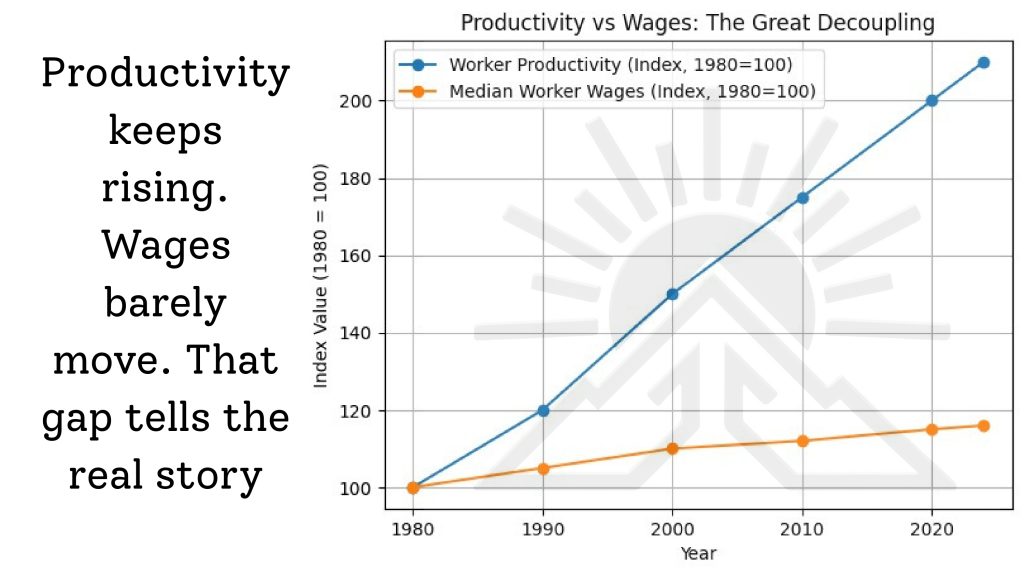
competition, allowing higher prices. Wages for workers have
not increased at the same speed as prices. This creates financial
pressure on middle- and low-income families. Big corporations
influence policies through lobbying. These policies often favor tax cuts for businesses instead of consumer relief. Housing prices
increased as real estate investors bought large volumes of property. Healthcare costs rose due to profit-driven systems. Education
became more expensive because of privatization. Supply chain disruptions were used as excuses for long-term price hikes.
Shareholders expect constant profit growth. Businesses pass risks to consumers instead of absorbing losses. Small businesses
struggle while large firms dominate markets. Inflation benefits those holding assets like stocks and property. Everyday necessities
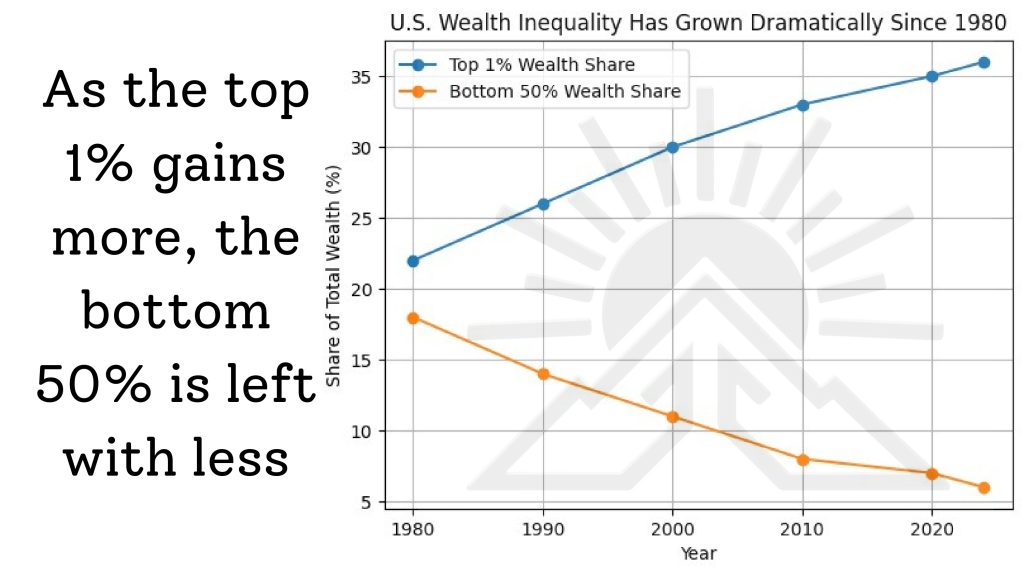
become harder to afford. Economic inequality continues to widen. Without strong regulation, inflation remains controlled by
corporate interests.
Mission:
The Dawn Movement is a national, non-violent uprising of people determined to break billionaire control over America, without major
changes to lifestyle. We unite communities, reduce our dependence on billionaire-built systems and create new
democratic, community-owned institutions that give real power and real freedom back to the people. Also roads on videos(ever).
This is Culture. Not Politics.
The Dawn Movement is a people-powered, peaceful force rising
to challenge billionaire dominance in everyday life. Without
demanding radical lifestyle changes, it empowers communities
to reclaim control, rebuild local systems, and establish
transparent, community-owned institutions. By reducing
reliance on billionaire-driven platforms and rejecting ad-
controlled media, the movement restores dignity,
independence, and genuine freedom to the people. This is not
political campaign—it is a cultural shift. The Dawn Movement is built on collective action, shared responsibility, and peaceful resistance.
It challenges systems that concentrate wealth and decision-making in the hands of a few, while everyday people lose control over their
lives. By strengthening local networks, supporting community ownership, and rejecting exploitative platforms, the movement restores
dignity, choice, and independence. It is about reclaiming time, labor, and culture—without violence, without extremism, and without
surrendering humanity to profit. This is a social awakening, driven by people, for people.
values:

Our core values are dignity, community, democracy, shared prosperity,
fairness and independence. Every person deserves a stable life, fair wages,
and the freedom to live without being exploited by concentrated wealth.
Real power starts with people supporting one another, not with distant
corporations or billionaire-owned institutions. Political decisions should
reflect the will of the people—not the preferences of a wealthy few. We believe wealth should circulate through communities, not
stagnate in the hands of billionaires. No one should accumulate so much power that they can dictate the fate of millions. People
should not be forced to rely on billionaire-owned systems for basic needs, work, housing, or financial stability.
Why now?
America is at a breaking point. Housing is unaffordable. Wages have stagnated for 40+ years. Debt is normalized. Healthcare bankrupts
families. Big Tech tracks everything we do. Billionaires influence elections behind the scenes. Communities are hollowed out, there is
no neighborly love anymore. People feel alone, exhausted, and powerless. At the same time, we have the technology to build
alternatives. Public awareness of the inequality gap is at an all-time high. The cost of living crisis is universal. Trust in institutions is
collapsing. More people are looking for a way out. The time is now.
Important Note:
We are not against success.
We’re not against millionaires.
We’re not against people who work hard.
We are against a ruling class formed by: extreme wealth concentration, political influence,
ownership of essential systems, monopolistic control, dynastic power, inherited dominance and
platforms that extract value from millions.
The problem isn’t wealth, it’s unchecked power.
The Dawn Movement is a non-violent, lawful, peaceful movement committed to rebuilding what
the billionaires have hollowed out.
It’s not left-wing or right-wing.
It’s not a political party.
It doesn’t endorse candidates.
It’s not policy-first or election-first.
Why?
Because oligarchy is a structural problem, not a partisan one. We must unite, not further divide.
What’s in it for me?
The Dawn Movement leads to:
● lower costs
● better wages
● more stable communities
● less debt
● cheaper banking
● better local businesses
● fewer monopolies
● more control over your life
● more democratic choices
● less billionaire influence
● no ads on videos
It’s not just moral, it’s practical.
This movement makes life better for you, your family, your neighbors.
Onboarding:
This movement is extremely easy to participate in. Anyone can join without major impact to
their lifestyle.
Step 1: Learn the Core Idea
“No one should be ruled by wealth.”
Step 2: Make One Micro-Shift
Move one thing in your life from billionaire-owned → community-owned.
Example: switch a bank account, buy from a local pharmacy, support a co-op, do one grocery
trip a month at a family-owned market instead of Publix/Amazon/Walmart, buy produce from a
farmer’s market once a month, get takeout from a local restaurant instead of UberEats, buy
bread from a local bakery once a week.
Step 3: Spread the Movement
Bring awareness to as many people as you can. Share one story or fact.
Answers:
“Is this political?”
No. It’s ethical and economic. No parties, no candidates.
“Is this anti-rich?”
No. It’s anti-ruling-class and anti-oligarchy.
“Is this socialism?”
No. We support markets—just not monopolies or billionaire domination.
“Is this violent?”
Absolutely not. Everything is peaceful and within the law.
“Won’t this hurt the economy?”
No. It strengthens communities, small business, competition, and local wealth.
“Why not just vote?”
Voting without economic power changes nothing. We rebuild society first.
“What happens to billionaires?”
They lose outsized power, not their humanity. They become regular citizens.
“What’s the end goal?”
A republic where no one can rule others through wealth.
THE PLAN;
Phase 1 - See The Cage
Goal: America needs to believe that billionaires are inherently harmful to society, they need to
have the capacity to recognize the dangers that billionaires pose. This part of the plan is purely
about shifting consciousness. This isn’t about policies or boycotts, its about helping people see
the cage that the billionaires have trapped us in.
We will do this with five different tactics. Each strategy can be spread through local community
events such as open mic nights, comedy clubs, live music, etc. along with social media
campaigns targeting these narrative shifts. Remember though, there is no central brand online
that is directly responsible. This is a ground-up initiative. All content should come from the
collective public.
Messaging Campaign
People need ways to effectively describe what they don’t like about billionaires. They know that
the system is corrupt, they just don’t know exactly why. If we give them talking points, it will
help their clarity on the why. Examples:
● Short, memorable phrases that spread easily such as “Extreme wealth is incompatible
with a free society.” and “The wealthy siphon money from circulating in the economy.”
will be repeated on social media channels, over and over, along with the Dawn
Movement logo.
● Short, interesting social media videos highlighting stats such as “$50 trillion shifted from
workers to the wealthy since 1980. That’s enough money to buy every NFL team, NBA
team, MLB team, and still have cash left over to buy Antarctica.“ People will gain the
language in order to speak on how large the wealth gap is.
Cultural Reframing
Shifting the perspective of billionaires from being admirable to harmful. This is about
rebranding the billionaire narrative, so people start to see them as parasitic, rather then
inspirational. Framing billionaires as the threat to democracy that they are will give people
more motivation to act. By labeling the billionaires with a negative connotation, people will be
more willing to separate with them. Examples:
● “The wealth gap created by billionaires actively harms democracy because the power of
political influence money brings outweighs all other influences”
● “The billionaires have made housing unaffordable by funneling their money into real
estate, increasing the prices the houses they don’t even live in.”
● “The wealthy hoards assets, increasing their price at no risk, but making them
unattainable for the modern middle class.”
● “Billionaires have so much influence in our elections, we are essentially an aristocracy
that answers only to them instead of those we elected. That is UNAMERICAN.”
● “Billionaires complain about handouts to poor people but receive more government
handouts than anyone else.”
Anti Billionaire Moral Narratives
Place the extremity of wealth on the moral scale, not political, economical. It’s about framing
things as right vs wrong, which is more effective then framing things like left vs right. The
current economic standing is to be considered an emergency to be dealt with, not the standard
that we need to live with. People want to be on the right side of history, and when there is a clear
distinction, it makes the choice easier. Examples:
● “Hoarding billions of dollars while the working class wages stagnate is evil”
● A blog post explaining why that amount of wealth accumulated damages democracy
Public Story Telling From Working Class America
Gathering information and stories from working class America about how billionaires have
effected their lives. Things like housing costs, medical debt, gig jobs, stories that will resonate
with the people. Stories move people better then abstract facts. It’s about adding a human
element to the movement. Example:
● A story about your Uber Driver and what their day to day looks like
● An interview with someone who has had trouble finding a job in this market
● A chat with someone who can’t afford to buy housing
● A blog post about someone who works for the billionaire-owned systems such as Amazon
No vote, no voice, no billionaire throne.
Anchor the movement around a single powerful phrase. It feels universal, moral, and
nonpartisan, and cuts to the matter at hand. Giving people an anchor gives them an obvious
answer to why they should be fighting.
Phase 2 - Withdraw Consent
Goal: Redirect money that goes to billionaire-controlled systems while minimizing the impact
on people’s lives. This is about reducing the influence of billionaires in our lives. If we use less of
their services/products, their power over us lessens. Big tech companies lose access to
day-to-day data as well, which weakens their ability to sell influence. We want to minimize our
interaction with billionaire-controlled systems like Big Tech or Big Banks. Switch into
alternatives that are easy and available to access as well.
Targeted Boycotts
Highly focused boycotts that target a single corporation at a time. Maybe even a single item from
a corporation at the beginning. It is important that we have one singular focus for each boycott,
we don’t want the message to spread thin. It’s about having a unified, dignified front that results
in visible wins. It shows that this movement has power, and creates momentum. An example of
this would be boycotting the Hershey’s bar, something that is easy and accessible to boycott.
Knock enough candy bars off the shelf, people will have a physical measure of their impact.
A Great Disavowal
Declaring independence from billionaire-owned systems. It’s a cultural rejection of the
billionaire norm. “We no longer see this as normal and acceptable”. People need a moment
where they psychologically detach from billionaires, the way that society once did for
monarchies. This is the moment where intention starts to kick in. If billionaires are considered
unacceptable, moving against them will be a lot smoother. People will be more ready to take
action when they know there’s something they can do.
“Move Your Money” Banking Campaigns
Encourage the people to move their money from banks to smaller banks, credit unions, or
community-developed financial institutions. This matters because the biggest banks use
deposits to fund billionaire-backed industries, lend to predatory landlords, and greenlight
monopolistic mergers. Moving money starves these banking empires, strengthens local
democratic, community-based financial businesses, and helps build infrastructure. This is about
moving money from Big Banks to your local credit union, which will strengthen your community
by allowing people to take out loans with better interest rates and lower fees. It also benefits us
because it weakens the billionaire influence.
Cancel Predatory Platforms & Replace with Worker/Community Alternatives
This is about “micro-shifts” in lifestyle that take money away from billionaire-owned systems.
Major companies such as Uber, Doordash, Amazon, consolidate their wealth by cutting the pay
of workers. Providing alternatives will: Keep wealth inside communities, reduce monopoly
power, and show people that there IS an alternative. Start small, we don’t want to completely
change the way people live their lives. Instead of buying your toilet paper at CVS, maybe buy it at
the local pharmacy/grocery store, even if it is a little pricier.
Phase 3 - Build What Comes Next
Goal: Create real, functional, non-billionaire backed institutions so people can live, work, and
thrive outside billionaire-controlled systems. This is the part of the phase where we introduce a
change in infrastructure. Phase 2 we used what already exists. Phase 3 is about building what
doesn’t exist yet. Creating stronger, more self-reliant communities is the key to future. When
communities build their own solutions: people feel less alone, they are more connected, money
stays local, neighbors trust each other more. It’s also about building community and uniting
people. Phase 3 is about making these alternatives the new normal.
Cooperative Tech Platforms
Create online platforms that are owned by workers, users, and communities, not billionaires.
Digital monopolies created and accelerated this modern billionaire class. They also have the
easiest path to replacement, because digital technology is built so quickly now, we can replace
dominant applications with speed. We need to replace them to keep from wealth accumulating,
and instead being spread in a community. Essentially, this is like replacing Uber with a local app
alternative, similar to Empower in New York. The technical effort to make these applications is
minimal because of AI coding, so they can be replaced. Imagine a world where theres thousands
of unique Uber Applications, each serving a local city. That’s small businesses thriving.
Worker-Owned Business
Businesses where workers share ownership, decision-making, and profits. Workers creates the
wealth and then keep it. When workers own their businesses, wages go up, it reduces inequality,
stabilize local economies, and eliminates billionaire influence. An example would be opening up
a fast food burger joint in front of a corporate owned Burger King. When people see they have
the option to switch, they will be more likely to choose the local place.
Local Agriculture & Supply Networks
Foods, goods and essentials that are sourced through community farms, regional supply chains,
and worker owned distribution networks. Monopolies concentrate power and create
vulnerability, community supplied networks keep money local, increase resilience, break
corporate chokeholds, and decentralize economic power. Getting ingredients from your local
supply networks instead of Walmart will shift the circulation of money from being stagnant in a
billionaires hoard to circulating in a local community.
Credit Unions/Community Banks
By depositing in credit unions or local community banks instead of big banks, these institutions
will be able to offer a better interest rate on loans. Credit unions exist to help people, not to
make profit. That means there will be lower fees, better customer service, and fewer predatory
practices. People that use credit unions are part-owners of the union, which means they will be
able to vote on how it’s run. Taking your money from Chase and putting it into your local credit
union which circulates wealth locally, strengthening the community.
Phase 4 - Seal the Future
Goal: Rewrite the legal, financial, and political structure of the country so that extreme wealth
is impossible, and democracy is permanently protected from this wealth gap happening again.
Wealth & Inheritance Caps
We need better laws that prevent a single person from amassing dynastic levels of wealth. Laws
without loopholes. Without structural limits, wealth will reconcentrate, even if the last
generation of billionaires disappears. Framing this as pro-democracy, not anti-success. Instead
of wealth being hoarded, if it’s financed back into the public system, there will be more money to
go towards programs and initiatives that help working class America.
Anti Aristocracy Tax Structure
A tax system designed not merely to fund government, but to prevent the formation of a
hereditary elite. Steep tax brackets for the extremely wealthy. Closing all the loopholes that
billionaires use to avoid taxes. The modern class is built on tax avoidance, speculative wealth,
unrealized capital gains, and shadow banging. Tax reforms address the root of this issue, not the
symptoms.
End Private Family Dynastic Foundations as Power Vehicles
Reform or abolish billionaire-run foundations that protect their wealth from taxes, act as private
political engines, and shape policy without democratic oversight. The foundations also allow
them to buy influence under the guise of charity. Foundations are often “charitable
laundromats” for power consolidation. Ending or restructuring them will restore democratic
policymaking, return philanthropic power to the public, prevent wealth as being disguised as
virtue, and break billionaire control of education, health and public institutions.
Public Financing of Elections
Elections funded by public dollars, not wealthy donors, so political power is not for sale. Forms
include democracy vouchers, public campaign grants, donation matching programs, and strict
limits on private donations. You cannot end the oligarchy while billionaires fund campaigns,
super PACs dominate messaging, and lobbying is pay to play. Public financing returns political
voice to ordinary people, expands candidate diversity, and makes policy reflect voters, not
donors.
Anti-Oligarchy Constitutional Amendment
A structural safeguard, like those that ended the monarchy, written into the Constitution, to
prevent future concentration of extreme wealth and power. Could include a constitutional right
to democracy, bans on private dynastic wealth, limits on political donations, and anti-monopoly
requirements. Constitutional amendments outlast political cycles, which seals the ability for the
billionaire class to re-form.
Appendix:
On Equality/Inequality
Equality is the foundation of social trust.
Inequality creates fear. Fear destroys trust.
On Social Mobility
Scarcity mindset changes long-term planning.
Low-wage workers often work long hours precisely because they can’t escape.
When every day is a crisis, long-term planning becomes impossible.
On Real Estate
The top 1% owns ~32% of all wealth, and a large share is stored in real estate portfolios.
On government handouts
For every $1 we spend helping poor families, we spend about $5–$7 giving tax breaks, subsidies,
and loopholes to corporations and billionaires
Billionaires receive more in government handouts through tax loopholes than poor families
receive in food, housing, and cash assistance combined.
Quantitative Easing is the biggest government handout in history. It’s trillions of dollars that go
straight into asset prices, and billionaires own almost all the assets.
Quantitative Easing is a permanent bailout for the wealthy. When rich people’s stocks fall, the
Fed prints trillions to lift them back up. When poor people struggle, the government tells them
to work harder.
Short & Impactful
Neutral / Academic
Activist / Movement Style
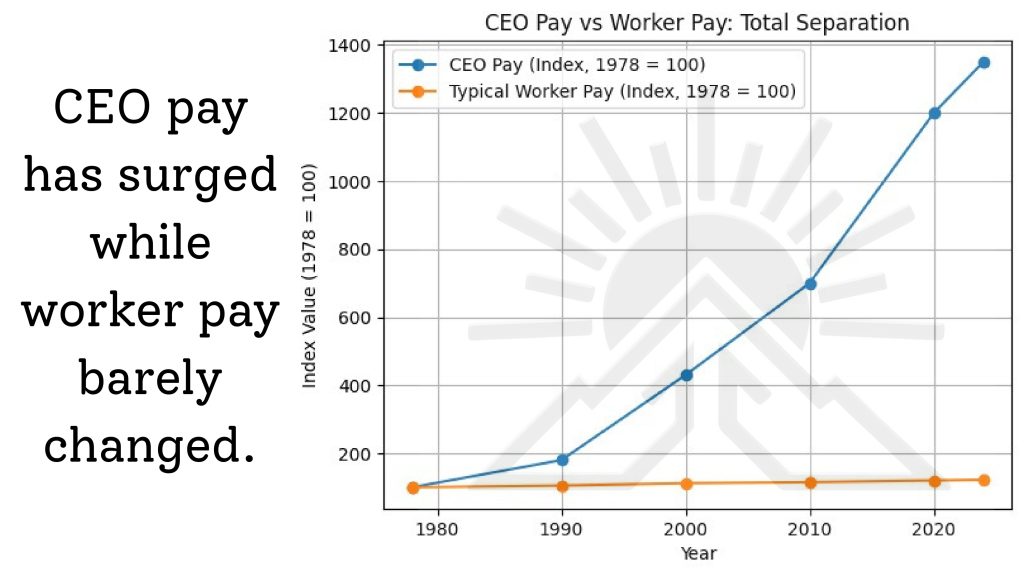
Strong & Critical
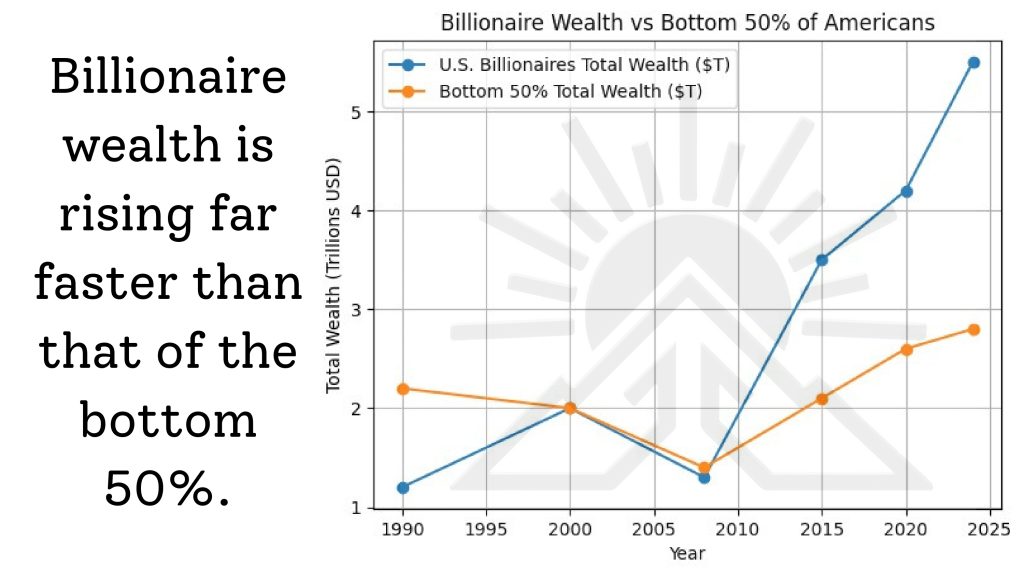
Clear & Informative
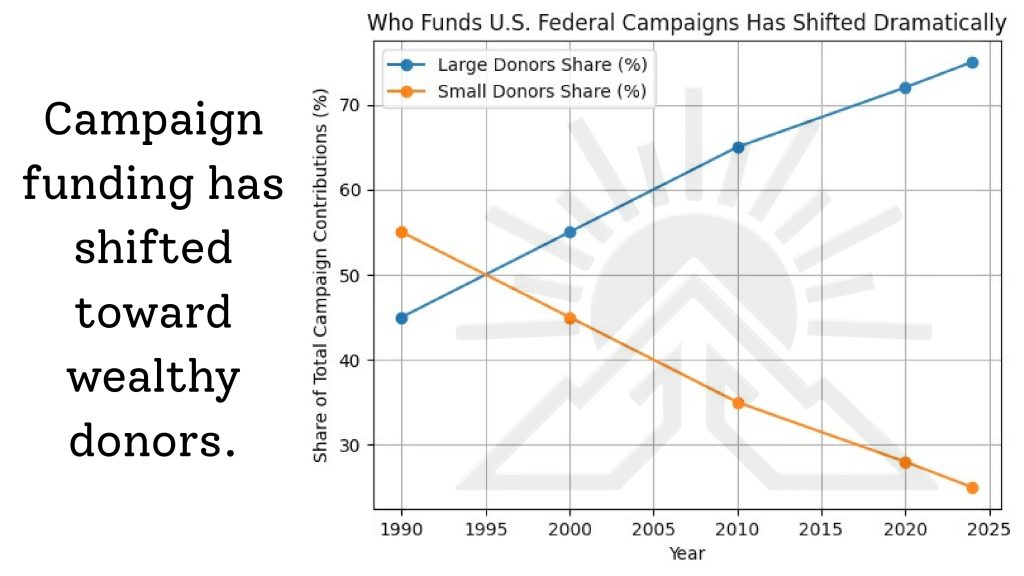

“Over the last 20 years, inflation in America has widened the gap. Working people struggle to survive while billionaire profits soar, forcing society to confront growing."
Copyright © 2026 All Rights Reserved By Dawn Revolution.